
How to Record Volleyball Matches for Useful Game Film
Choose a volleyball camera angle, preserve complete rallies, identify sets, and check lighting and segment order before uploading a match.
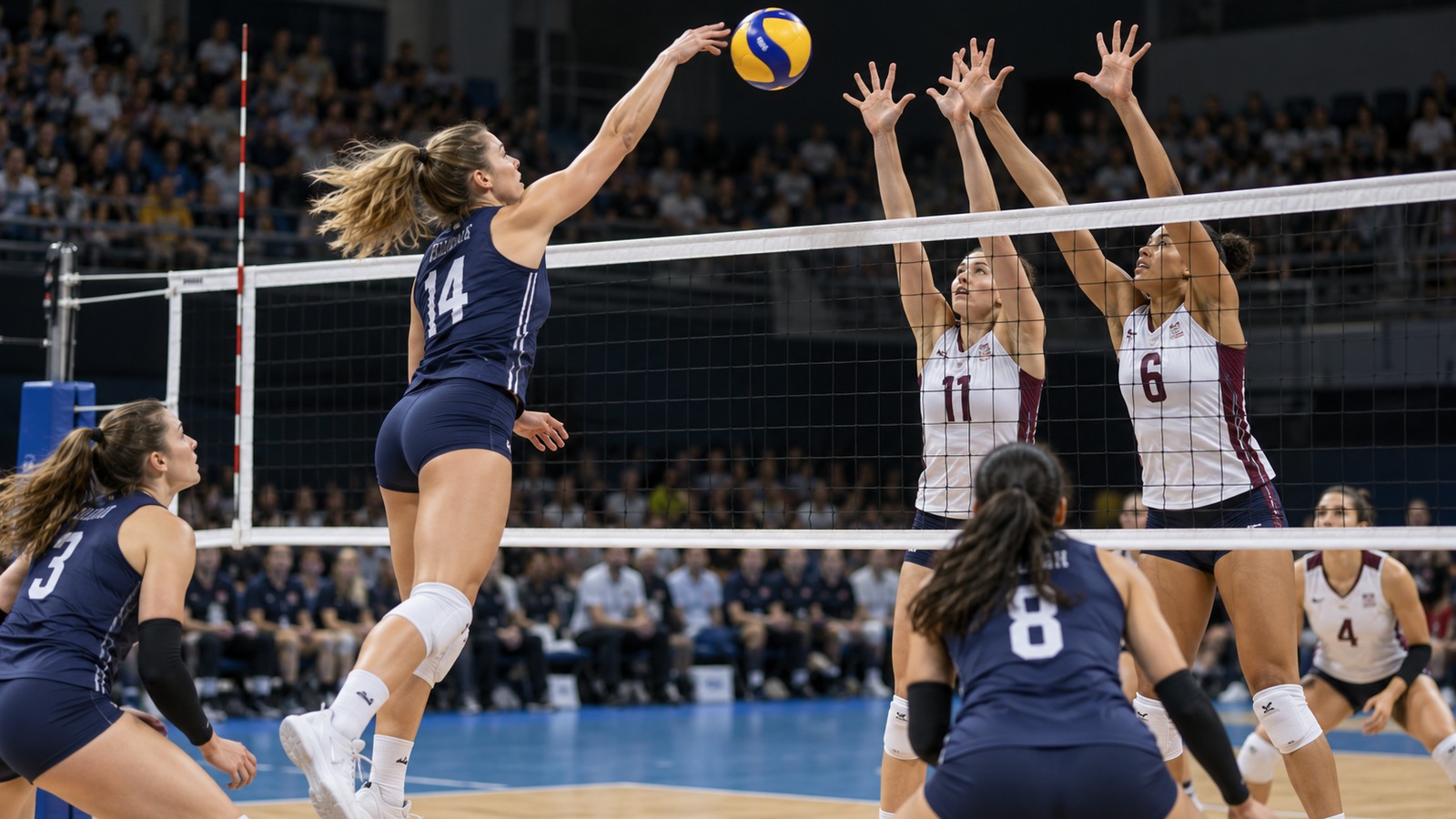
Volleyball rallies move quickly across a compact space. The best camera position for a full match is usually the one that keeps play visible consistently, rather than one that produces the closest view of a hitter. Decide what your audience needs to see before choosing the angle.
Compare available views
An approved end-court position can help show team spacing and the path of a rally. A sideline view may be the practical choice at a crowded venue. Each has tradeoffs: people or equipment can obstruct the end line, while posts and the net can interfere with a side view. Ask the organizer where filming is allowed and test the actual position.
Frame a practice rally before the match. Check that the court boundaries and enough space above the net remain visible. A high set should not repeatedly disappear beyond the image. Keep equipment out of playing space, officials' routes, and emergency access.
Use a stable view for complete rallies
Avoid following only the ball with rapid camera movements. A steady wide frame often makes reception, setting, attack, and defensive coverage easier to interpret. If the frame must move, make controlled adjustments and leave enough margin for the next contact.
Ask coaches whether they need both teams visible or primarily their own court. The recording purpose determines the compromise. A close shot suitable for a short feature may be unsuitable as the only game-film angle.
Keep sets and interruptions identifiable
Start before the first serve of a set and continue through its final rally. Keep the original files in order and note a camera stop, blocked rally, or missing section. If you film multiple matches at a tournament, identify opponent and match order immediately instead of relying on the camera's clock alone.
Before uploading, check that the description says whether the video is a complete match, one set, or selected rallies. When showing score information, verify it against a reliable event record rather than reconstructing it from memory.
Check the practical details
Gym lighting can change how motion looks on different cameras. Test a short clip at the planned settings and watch moving players, not just the stationary court. Listen for distracting commentary near the microphone. Follow the team's recording and publication process, particularly for youth events.
At the end of the day, copy the footage, test a second copy, and update your library index. Preserve the wide original even if you later crop individual plays for a recap.
Our game-day checklist covers preparation and handoffs. For postproduction, the beginner editing guide explains how to produce a clear viewing version without losing the rally sequence.